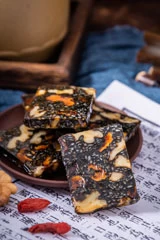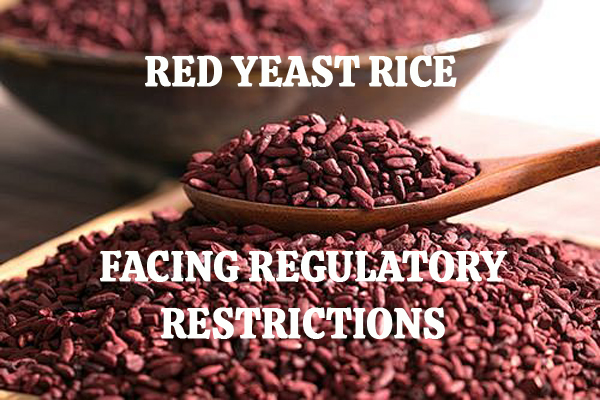
The European Commission has made a draft proposal to prohibit the use of Monacolin found in red yeast rice; the proposal should reach final stages before 2026. As a result, in 2026, food and dietary supplements containing Monacolin from red yeast will be completely banned.
Why is this happening? The reason is rather straightforward.
Monacolin K found in red yeast rice is chemically identical to the prescription drug Lovastatin, which is used to lower cholesterol levels.
To put it more clearly, Monacolin K is actually Lovastatin. Therefore, although consumers may think they are purchasing a natural health product, they are in fact ingesting an active ingredient that is essentially identical to a statin, and as such crosses the line of regulations.
The main risks comes from three areas:
1. Muscular Injury Hazards of Monacolin K
EFSA (European Food Safety Authority) has shown that muscle pain, muscle weakness and rhabdomyolysis are possible effects with even low usage (3mg/day) of Monacolin K (Lovastatin)
These classified as "adverse reactions" when taking statin medications.
2. Hepatic Injury Hazards of Monacolin K
Hepatic Effects from Monacolin K can also include increased serum enzymes and the potential to create hepatic impairment, which cannot be managed by consumers of red yeast rice in a non-prescriptive environment, i.e., they cannot control the level of Monacolin K if they’re taking OTC product versus Rx product.
3. Lack of Standardized Dosing – Major Challenge for Regulators
Red yeast rice products will typically contain widely varied amounts of Monacolin K (some with just a trace of Monacolin K, while others will have a high concentration and still other products may or may not actually contain Monacolin K), so consumers cannot accurately determine their daily intake from the product label or assurance of a safe daily intake, leading to a major challenge for product regulators.
While there isn't a complete ban on red yeast rice (RYR) in the US, there is an equally strong indication that regulation of RYR products will be more rigorous than it is now.
The US FDA has indicated that products containing large amounts of Monacolin K or Lovastatin, and products that are fortified with Monacolin K or Lovastatin will be treated as drugs rather than dietary supplements by the FDA.
As a result, RYR is still available on the US market, but how it is regulated is quickly becoming much stricter.
As opposed to RYR, our cardiovascular herbal supplement ingredients are much safer and much more stable.
Due to the tightening global regulatory climate regarding RYR ingredients, our philosophy continues to be that
We will never source raw materials that have drug safety risks;
We will always use classic Chinese herbal compound formulas that are clear and stable;
We will always accomplish “disease prevention and health maintenance” through our products.
Our cardiovascular health supplements contains clear sources of raw materials, controllable manufacturing processes, and gentle physiologic effects. Our cardiovascular health supplements contain no statin structures, and they are manufactured according to scientific criteria. They are therefore not only safer than RYR, but also more stable compared to single raw materials.
If you're looking for a safer, compliant, long-term alternative to RYR, please reach out to us.

+86-13570052379
+86-13570052379
Building 4, No. 11 Tongfu Road, Xicheng Industrial Zone, Xicheng Village, Renhe Town, Baiyun District, Guangzhou City
Custom Supplements